
The Biomaker platform...
Biomaker is free resource for tools and information that help enable researchers, students, and hobbyists to build scientific instruments and experimental setups using off-the-shelf components and open source software.
Biomaker includes a training platform that has been based on a series of microcontroller boards including support for a variety of hardware components, such as microcontrollers, sensors, and actuators, as well as a set of software tools and libraries for programming and controlling these components. We have been using a visual programming language for Arduino-compatible microcontrollers, XOD (xod.io) which provides a dataflow model for programming interactive devices. However, recent years have seen the emergence of more powerful hardware and disruption of the development of XOD. The organisers, Matt Wayland and Jim Haseloff in Cambridge are developing updated resources for Biomaker, which are described on this website (biomaker.org), and a new site at openrig.science
New Biomaker tools
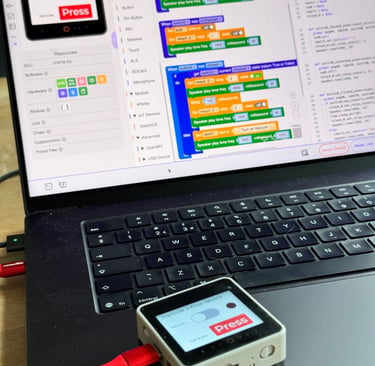
The aims of these updates to Biomaker are to (i) support modern ESP32 microcontrollers which provide dual benefits of improved performance and low cost; (ii) adopt a free development environment that allows no-code/low-code visual programming and a pathway to Micropython coding and use of AI assistants; and (iii) integrated development of graphical interfaces for producing touchscreen-based user interfaces.


Practical examples and project logs
The shift in emphasis from training to the task of building practical devices is documented here. Certain devices are crucial for engineering DNA and cellular systems. Commercially available instruments are often expensive and difficult to obtain secondhand. However, the availability of 3D printers, programmable touchscreen controllers and cheap sensors, wireless communications and mechanical actuators simplifies the design and construction of bespoke instruments. As well as lowering costs, this allows the use of the latest components, adaptation for specialised applications and subsequent customisation or repair.
Jim Haseloff has recently retired from his academic role at the University of Cambridge, and is focusing on demonstration projects to produce low cost tools for open science. For example, key projects are:
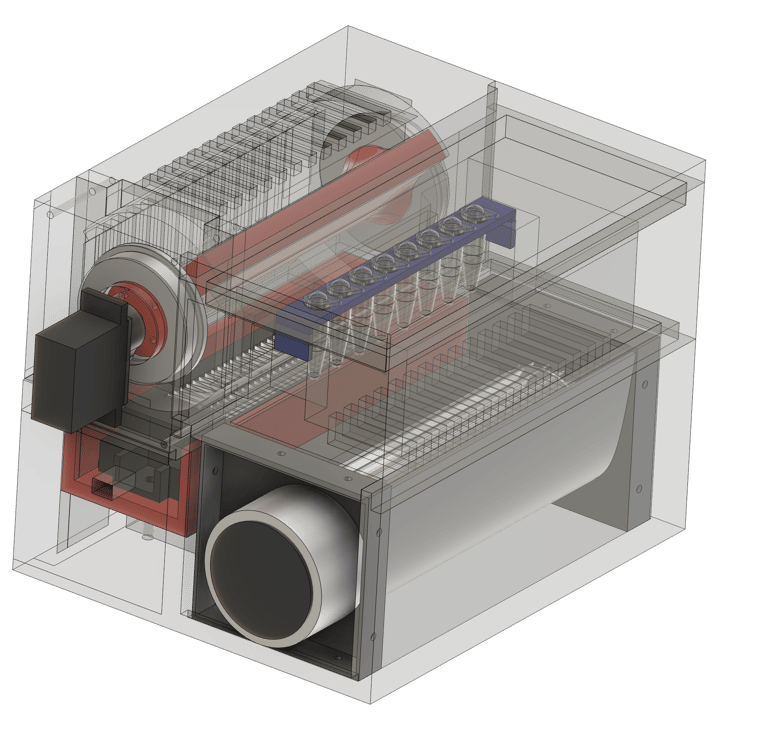
Air-flow driven microtube reactors for isothermal DNA modification, assembly, and LAMP reactions, and thermocycling PCR amplification.
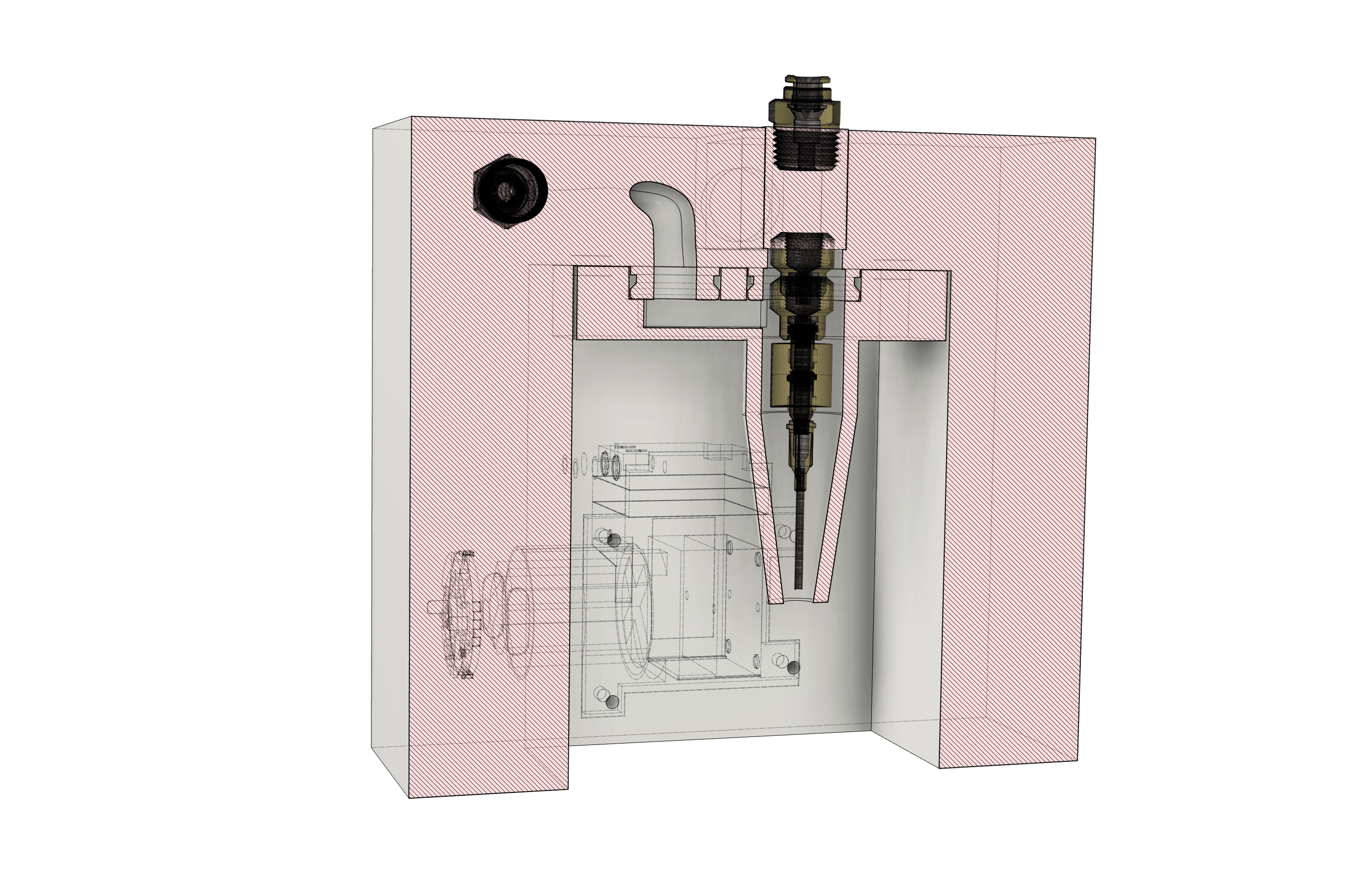
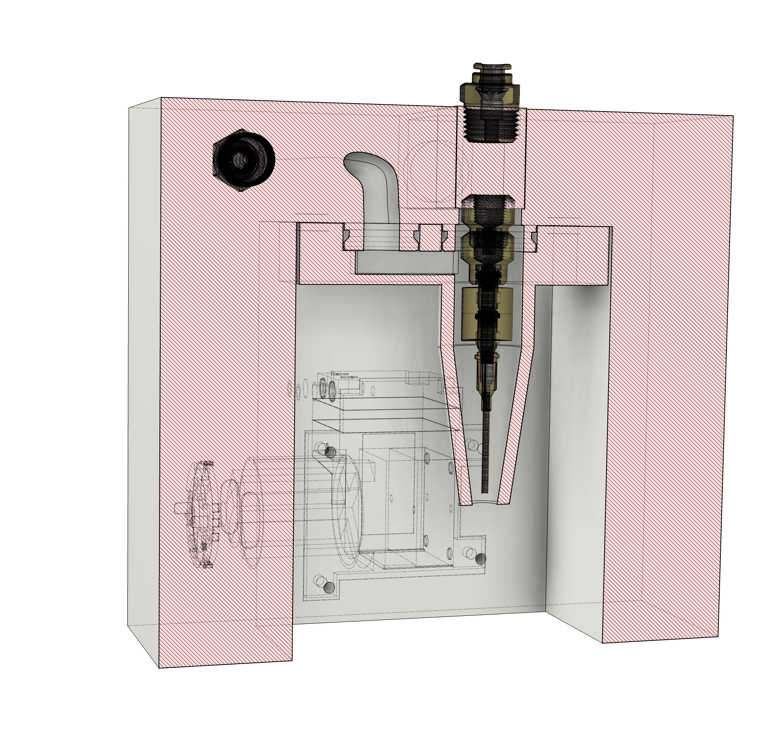
Particle inflow gene gun for plant transformation.
Custom optical systems for whole plant observation.
Custom hydroponic systems for Marchantia plant propagation.
These projects are being documented while still in progress. So they should be (most definitely) regarded as works in progress. The hope is that "live" documentation of the process may be helpful for others working on related challenges. For example, testing procedures are likely to be useful in different contexts. The project logs are listed under the Projects menu topic.
The shift to documenting work in progress comes with a more personal viewpoint. These hardware/software projects are aligned with work developing free tools for bioengineering in a simple plant system, and the overall aim is to integrate these low cost DIY tools with a platform for chloroplast engineering and plant-based bioproduction. Online updates can be found on Bluesky (@jimhaseloff).
The use of 3D printing, commodity electronics and visual programming tools for building advanced instrumentation is described at biomaker.org. These tools provide new ways of making science and bioengineering cheaper and more accessible in resource-limited settings. We pursue a vision of making state-of-the art experimental approaches more widely attainable in universities, schools, community labs and by hobbyists.
There has been a parallel development of simple biological systems and DNA tools that complement this. The sister site marchantia.org describes engineering approaches for working with the simple liverwort plant, Marchantia polymorpha. Marchantia has some unusual features that are similar to those thought to be shared with early terrestrial plants - which provide a host of benefits for experiments in biological studies and engineering. More information can be found on the marchantia.org website.


Build custom hardware tools - now meet a simple platform for engineering plants


biomaker.org